

General Surgery Explained: Common Procedures and Recovery Tips
15 Oct 2026
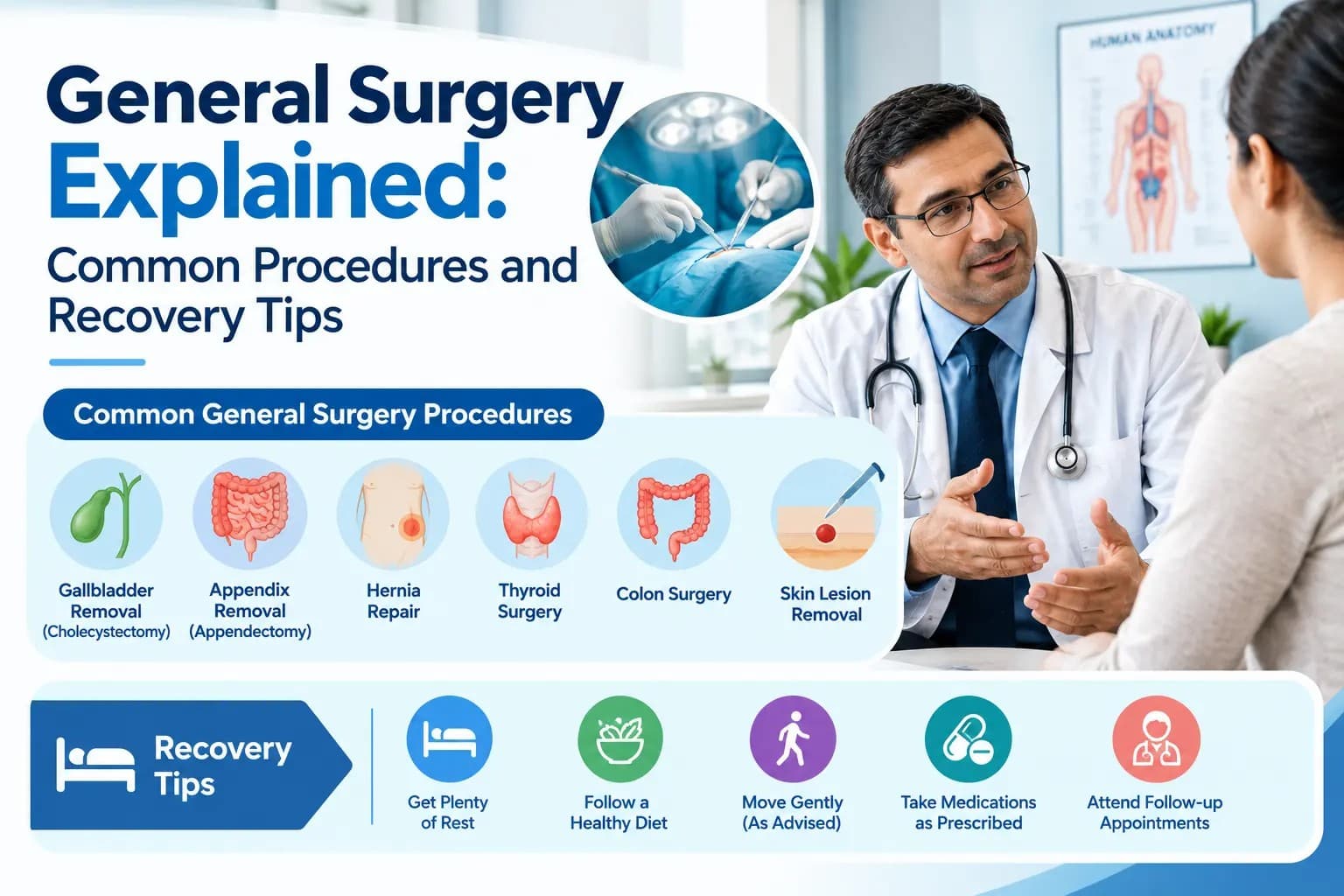
General Surgery: Common Procedures and Recovery Tips
A referral to a general surgeon can raise immediate questions about admission, anaesthesia and time away from normal activities. Yet the referral is often the beginning of an assessment rather than confirmation that an operation is needed. The diagnosis, severity of symptoms and likely benefit of treatment determine what happens next.
General surgery covers a broad range of conditions, including many affecting the abdomen, abdominal wall and soft tissues. For someone choosing a general surgery hospital, understanding the pathway from assessment to recovery is as useful as recognising the name of a procedure. Each stage contributes to an informed, practical treatment decision.
Different conditions require different decisions
Gallbladder removal is commonly considered when gallstones cause symptoms or complications. Stones discovered incidentally without symptoms do not automatically require an operation. Assessment establishes whether the symptoms are likely to come from the gallbladder and whether removal is appropriate. Jaundice, fever or severe persistent abdominal pain requires prompt medical evaluation.
Hernia surgery addresses a weakness through which tissue can protrude, often producing a swelling in the groin or abdomen. The type of hernia, discomfort and risk of complications influence the recommendation. Some patients may be monitored, while others need repair. Sudden severe pain, vomiting or a firm, tender swelling that cannot be reduced requires emergency assessment.
Appendicitis usually needs urgent hospital treatment and often surgery. Its symptoms can vary, so persistent or worsening abdominal pain should be assessed rather than managed on the assumption that it is indigestion. The clinical team determines the diagnosis and appropriate treatment using the history, examination and investigations where needed.
General surgeons may also assess breast or thyroid conditions, skin lesions and problems around the anus. The required expertise depends on the diagnosis and proposed procedure. Ask whether the surgeon regularly manages your condition and whether another specialist should participate in the treatment plan.
The approach should follow the clinical need
Some operations can be performed laparoscopically, using small incisions and a camera. Others require an open approach. Suitability depends on the condition, previous surgery, anatomy and findings during the operation. A smaller incision does not remove the need for careful assessment or eliminate surgical risks.
Ask why the proposed approach fits your case and whether the plan might change during surgery. The discussion should cover the expected benefits, relevant complications and alternatives. Understanding these possibilities before admission helps patients and families interpret decisions if the operation proves more complex than expected.
Sir Ganga Ram City Hospital's Laparoscopic and General Surgery Department lists gallbladder, hernia and appendix procedures among its services. Patients can arrange assessment through the hospital to discuss which approach, if any, is suitable for their condition.
Bariatric surgery involves ongoing metabolic care
Patients seeking a bariatric surgeon in Delhi need an assessment that considers obesity-related health problems, previous treatment and the ability to follow ongoing care. Bariatric surgery is intended for selected patients and requires discussion of benefits, risks and alternatives. It is not interchangeable with routine abdominal surgery.
Preparation and follow-up include changes to eating patterns and monitoring for nutritional problems. Depending on the procedure, supplements and continued blood tests may be necessary. Sir Ganga Ram City Hospital lists bariatric procedures and nutritional follow-up within its services; eligibility and the choice of procedure require individual specialist assessment.
Preparation makes the admission plan more reliable
Before a planned operation, share your medical history, allergies and a complete list of medicines and supplements. Mention previous problems with anaesthesia. The team may arrange investigations or request review of existing conditions before confirming readiness. Medication changes should follow specific instructions rather than assumptions about what should be stopped.
Ask for written fasting instructions and clarify anything uncertain. Arrange transport and support at home, particularly after procedures involving anaesthesia or sedation. Discuss costs, insurance approval and likely time away from work before admission. These practical arrangements help prevent avoidable confusion for your family when the clinical team is ready to proceed.
Recovery needs a procedure-specific plan
After surgery, the team monitors recovery from anaesthesia, pain and other clinical needs. Discharge depends on the operation and the patient's condition. Before leaving, understand wound care, prescribed medicines, activity restrictions and the follow-up date. Ask whom to contact if symptoms change outside clinic hours.
Movement usually resumes gradually according to the team's advice. Walking, lifting and returning to work have different demands, so ask about each separately. Feeling comfortable at rest does not necessarily mean that heavy physical work is appropriate. Follow the instructions for your operation rather than another person's recovery schedule.
Food and fluid advice also varies. Follow any procedure-specific restrictions and discuss nausea, poor intake or constipation with the team. Keep dressings and wounds managed as instructed, and avoid applying unprescribed products. Recovery should be reviewed if pain is worsening or progress differs substantially from the expected course.
Know when to seek further help
Contact the surgical team urgently for fever, increasing wound redness, discharge, persistent vomiting or worsening pain. Sudden breathlessness, chest pain, fainting or severe bleeding requires emergency care. A clear escalation plan matters because complications may develop after a patient has returned home.
Successful surgical care connects an appropriate decision with preparation and follow-up. At the consultation, establish why treatment is recommended, what recovery involves and how progress will be reviewed. These details help turn an unfamiliar procedure into a care plan that patients and families can understand.